
A full day’s worth of events could be reduced to a couple of lines in the police report. The actual charge might be contained on one line.
Real life is rarely that neat and tidy.
Perhaps dinner started at seven. When it was nine there was a fight. Someone went home at ten before they returned later. The neighbor called the police just before midnight. A driver might have been out with his buddies, then returned to the car, been stopped several miles away, administered an initial breathalyzer test, and then arrested. The next morning, all this activity could have been compressed into a criminal case.
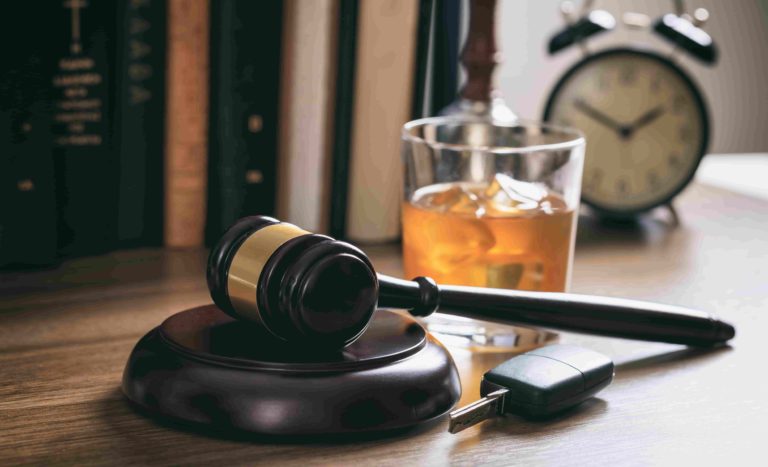
For criminal defense lawyers in Grand Rapids, Michigan, one useful task is putting the sequence back together.
Begin before you are arrested
Everyone will remember the dramatic scene: flashing lights, officers waiting at the entrance, handcuffs being placed on, or a phone call from a detective. However, understanding the incident could be more difficult if you look back.
If there is a case of domestic violence in a case of domestic violence, for instance, the relationship between the two parties is legally relevant according to Michigan law. The information offered by this firm includes spouses and ex-spouses as well as people who have a child together as well as current and former romantic partners as well as those who live together.
The events leading up to the response of police could be important also. Was there a disagreement in the process? Who was involved? When did the first interaction occur? Did anyone go away and return? Did anyone talk to each other prior to or after the event?
These aren’t just questions to create a false story. These questions could help Grand Rapids, Michigan domestic attorneys understand the accusation and its sequence rather than interpreting the appearance of the police as a beginning.
It’s also essential to understand the specific charge. Michigan distinguishes among different types of domestic violence charges, and the firm’s materials state that prior convictions could impact the severity of future charges.
A Stop for OWI has its own timeline
A drunk-driving case can unfold over a shorter time however, the sequence of events is still important. It is crucial to think about the sequence of events including the driving itself, what caused the officer stopped you, what the officer observed upon stopping you, roadside procedure, statements along with the arrest itself. Treating all of that as one single event could conceal the fact that different parts of the confrontation serve different purposes.
Michigan defines OWI as the crime of operating while intoxicated as defined by MCL 257.225. The firm’s announcement states that a breath test, often referred to as PBT, or PBT, is a tool for screening and is not admissible in trial to prove drunkenness; however, it could be used in determining probable motive.
This is one reason defense attorneys for drunk driving in Grand Rapids may reconstruct the traffic stop rather than focussing on one number that a driver recalls from the side of the road.
Sometime, the Timeline appears on a phone
It is not every criminal investigation starts by police being witnesses themselves.
Allegations that a sexual offence could be attributed to incidents that occurred earlier in life like a prior relationship, family interaction, or work environment. According to the descriptions of the firm, individuals might be aware of an investigation prior to when they are taken into custody.
In this case, chronology could be scattered over a variety of sources. Communication records are an excellent way to determine when people spoke. Digital records can help to clarify the sequence of events. There could be multiple accounts of the same incident.
It doesn’t mean that a text message is a guarantee that is a proof or a disproof of an assertion. Criminal sexual misconduct defense attorneys in Grand Rapids may have to look at how statements, communication and other evidence are connected.
Memory and Documentation Are Not the Same Thing
Following a stressful encounter individuals tend to recall instances, not time stamps. “It occurred later in the night” might be perfectly normal in conversation, but is too vague to be a valid answer to a crucial legal issue.
Documents can aid in organizing memories. Call history and messages and receipts, court documents or even receipts as well as photos will help you create the chronology. What is relevant will depend entirely on the circumstances.
Also, the records should be kept rather than changed in order to make the circumstance look more appealing. A lawyer for defense can determine what details could be crucial and determine how to handle the situation.
One case number can’t be able to capture the entire evening
Shawn Haff, a criminal lawyer from Grand Rapids with more than 16-years of experience, reports that the Criminal Defense Law Center of West Michigan dealt with more than 1500 legal proceedings over its more than 25 years of practice. The practice covers OWIs, assaults, domestic violence, drug and weapon charges, sexual crimes, retail frauds, expungements and driver’s licence restorations.
Past outcomes, such as dismissals, acquittals or reductions in charges, don’t guarantee the outcome of a new case.
Every new episode has its characters, sequences of events, allegations, evidence, etc. That’s exactly the reason.
An arrest can happen in minutes. It is possible to create the charge’s label in only one or two words. To grasp the sequence of events leading up to it, it is often necessary to slow down the night and examine the events that actually transpired.