
A company is awarded a significant contract. The production requirements for the month increase, but the factory isn’t equipped with more space and has employees with previous experience or extra hours during the day. While adding a second shift could temporarily help, it could be a source of new work in the form of supervision, training, or the need for quality control.
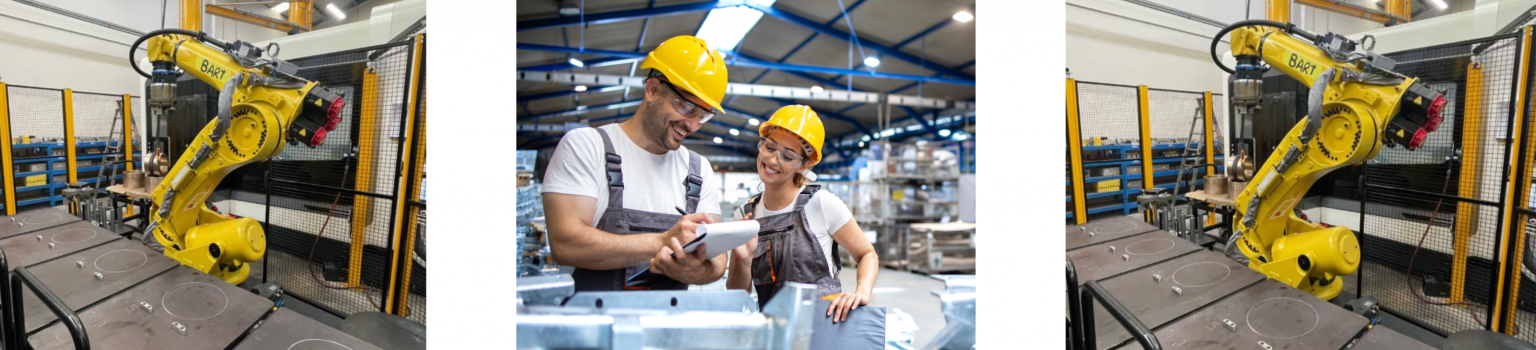
Image credit: automatedsolutions.com.au
Situations like this reveal an important purpose of robotic automation. Robotics isn’t simply about replacing people with a machine. A suitable application can alter how manufacturers use their production capacity.
You can check out the time difference between the products
Inefficiency in manufacturing doesn’t have to be a major issue. Imagine a person spending 15 minutes searching for a part after which they spend 10 seconds putting the material and then moving it. The time difference could seem minor for a single part. If repeated a thousand times, these seconds can create significant production time.
Same goes for waste material. Similar is the case to waste materials.
Before making a decision on the equipment they require, businesses looking into robotic automation Australia can gain from analysing the tiny losses. The analysis by ASA’s experts is designed to uncover problems with quality and bottlenecks as also waste and other constraints in a project.
The robot has to fit the system around it.
The decision to choose a robot is a single decision in engineering. The system will also require tools, guarding control, sensors fixtures, conveyors, electrical integration, and communication with existing production equipment. Engineers need to consider the payload and reach while making decisions about how the robot will move through its space and interact with the environment surrounding it.
ASA’s approach to FANUC robot automation encompasses conceptual development and design including CAD Simulation, offline Programming. Digital simulation lets engineers analyze configurations, estimate cycles times and test the system prior to it becoming operational on the customer’s floor. This is particularly beneficial when space is limited or when new robotics need to be integrated with a production line that is already in place.
Painting and Dispensing demonstrates why Repetability is Important
Certain manufacturing processes show the importance of controlled movements. Imagine coating hundreds or thousands of parts. It’s not enough just to finish each part in a short time. The movement, distance, speed, and the application must be controlled from the start of the production run to the final.
The ASA specialists are skilled in dispensing and painting across various industries including aerospace and automotive. Industrial robotic automation in these settings allows for repeatable motions while reducing the exposure of workers to physical demands or those that could cause harm.
Controlled better can reduce excessive material consumption, thereby contributing to lower waste alongside productivity improvement.
Installing the system is not enough. It is still necessary to have people to manage it.
Automation can’t replace the manufacturing know-how. It changes the skills required for operating and maintaining the process.
Employees need to know how to operate equipment safely identify abnormal behavior as well as troubleshoot issues and take care of maintenance. Production requirements can change over time, which means that the processes and programs need to be adjusted.
ASA offers training on site that covers programming, safe operation, troubleshooting, as well as electrical and mechanical maintenance. Additionally, the company provides maintenance as well as ongoing support to evaluate the condition of equipment and to address wear over the system’s operating time.
Capacity is about more than just working faster
Increased capacity for Australian manufacturing companies doesn’t mean buying a bigger building or adding additional labor on repetitive processes. Sometimes, the more important question is whether the current production process can be engineered differently.
ASA has created and integrated automation systems in Australia since 2002. We also help with projects overseas. Its method of analysis connects needs and engineering with simulation FANUC robot integration training, as well as servicing.
It’s not about automation for its own sake. A system worth its weight in gold should bring tangible benefits to the manufacturer, like better production reliability, better quality process, more secure processes and less waste.