
Even a developer with six years of hands-on technical experience can find it challenging to describe an architectural decision when interviewed. Past marketing achievements does not guarantee that a candidate will remember the right performance numbers when questioned.
These examples do not necessarily indicate weak qualifications. The interview environment demands several skills at once: remembering relevant information, understanding new questions, organizing ideas, and expressing them clearly despite pressure.
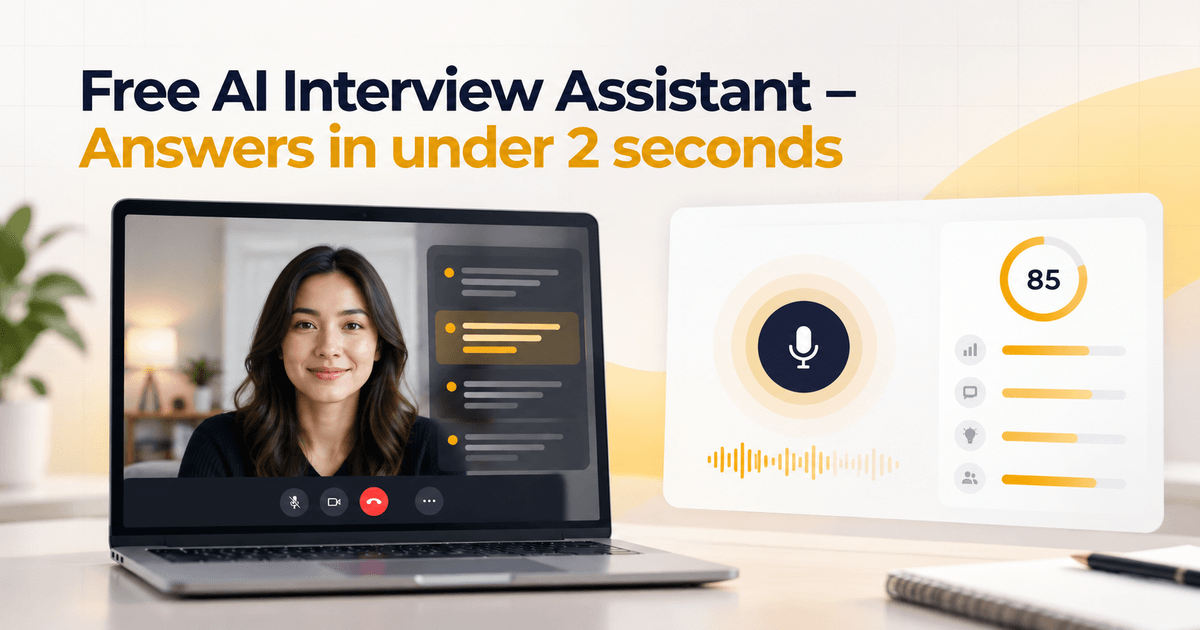
Candidates now have artificial intelligence tools for practicing these abilities. Through preparation tailored to the candidate, simulated interviews, and live response suggestions, Interview Pilot aims to help job seekers feel more confident in professional interviews.
Organize Your Professional Stories Before the Interview
A familiar approach to preparation is to find common hiring questions and memorize recommended replies. The limitation is that generic answers rarely reflect the details of someone’s actual career.
Consider the familiar question, “Tell me about a time you managed a difficult project.” A strong answer cannot rely solely on a polished first sentence. The candidate should describe the situation they faced, clarify their own role, explain their choices, and report the result.
To make its suggestions more relevant, Interview Pilot incorporates details about the applicant’s career history, the intended job, and the prospective employer.
An AI interview assistant can help users identify experiences worth discussing, organize supporting details, and recognize gaps in their explanations. Users can subsequently practice explaining what actually happened in language that feels authentic to them.
Knowing the Technology Is Only Part of the Interview
Technical interviewers look beyond a candidate’s familiarity with software development languages, platforms, and engineering concepts. Hiring teams often examine the candidate’s problem-solving process and compares possible solutions.
When discussing database optimization, a developer may be asked to describe how indexing improved query performance, the associated trade-offs, and the method used to measure the improvement.
Both technical questions and behavioral prompts are supported by Interview Pilot. Through its interview copilot functionality, the platform processes questions asked aloud and generates context-aware suggestions.
However, understanding the reasoning behind a suggested answer remains essential. Candidates should be prepared to explain technical decisions independently, particularly when interviewers ask additional questions or modify the original scenario.
Rehearse the Conversation, Not Merely the Questions
Reading interview questions silently is quite different from answering them aloud. Verbal rehearsal helps candidates notice communication problems that written practice might miss, such as starting with an overly long introduction, explaining ideas unclearly, or relying on unnecessary technical terminology.
With its interview question bank and AI mock interviews, Interview Pilot gives candidates a way to prepare ahead of time for a recruiter or hiring manager conversation.
A useful preparation method involves answering the same question several times with different degrees of depth. For an initial screening, an applicant might prepare a thirty-second summary, then develop a fuller answer for a technical conversation. Being able to vary an explanation helps candidates avoid sounding scripted while responding to the interviewer’s priorities.
Understand the Rules for AI-Assisted Interviews
The availability of real-time interview answers raises questions about professional honesty and the rules set by employers. AI assistance may be permitted in certain organizations’ assessments, but other employers require an unaided assessment of skills.
Anyone searching for a copilot for interview preparation or live assistance should clarify the employer’s rules before using such technology during an actual interview. Candidates should also consider requirements concerning consent and confidentiality when software processes interview conversations. Suggestions from AI should help applicants express authentic knowledge rather than misrepresent their qualifications or make up professional experiences.
Finding Time for Consistent Interview Practice
Interview preparation often happens between work commitments, commuting, and personal responsibilities. Being able to access preparation tools on different devices can help candidates rehearse more consistently.
Interview Pilot is available on Mac, Windows, iPhone, Android, and through a web version. Interview Pilot states that more than one million people worldwide use its service, which includes a free tier with limited weekly AI use and paid subscriptions for unlimited usage.
Ultimately, effective interview preparation isn’t about committing polished answers to memory. The aim is to feel at ease explaining your knowledge, showing your reasoning, and communicating the contribution you could make to an organization.
When used with care, Interview Pilot can assist with preparation without displacing the candidate’s own professional history, independent judgment, or communication abilities.